EV Battery Monitoring vs Traditional Telematics
Michael Bar
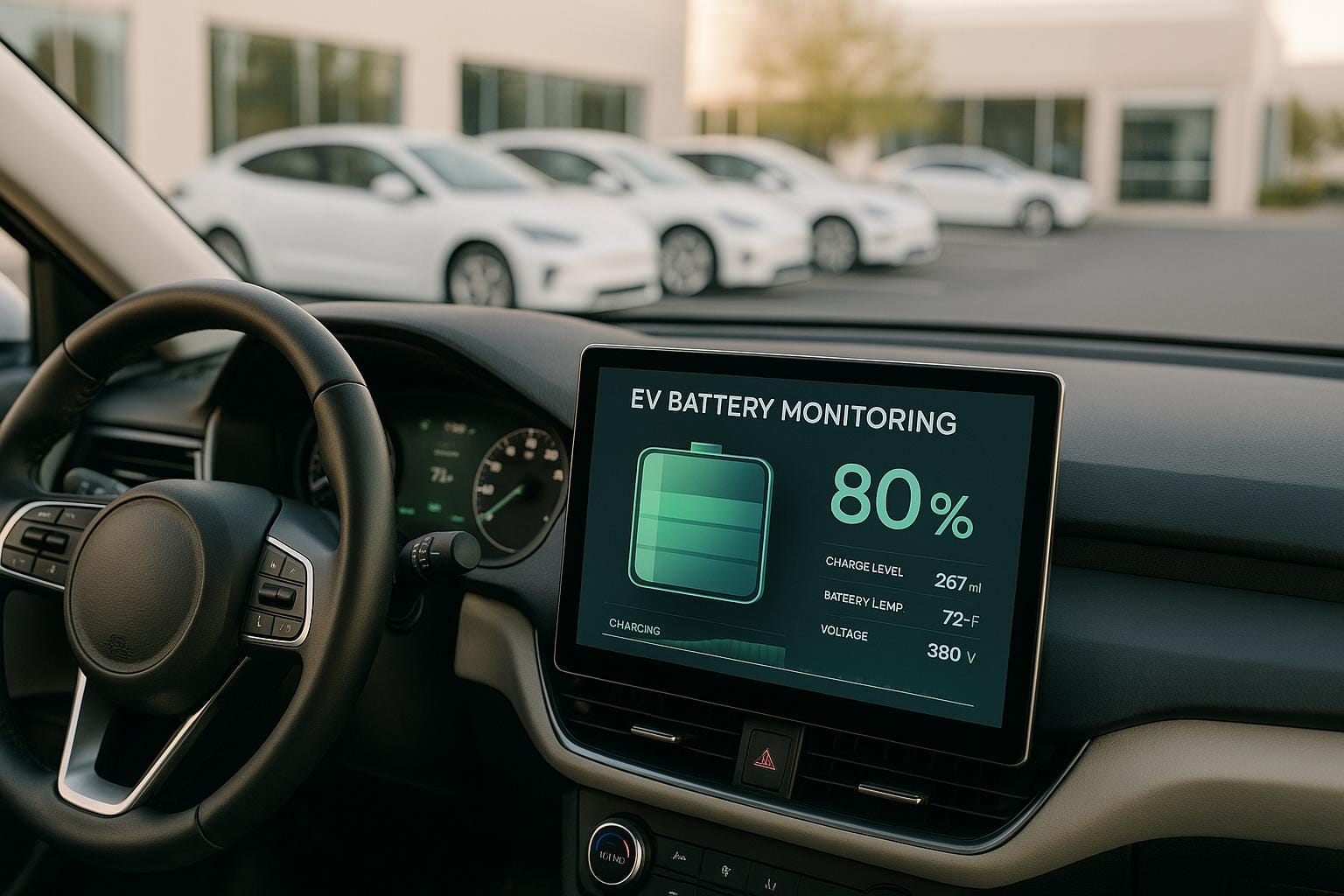
EV battery monitoring systems are reshaping how fleets operate in the UK by addressing gaps in older telematics designed for petrol and diesel vehicles. While traditional telematics focus on location, speed, and basic diagnostics, EV monitoring dives deeper into battery health, charging habits, and energy use. This shift is critical for managing electric fleets effectively, reducing breakdowns, and cutting operational costs.
Key Takeaways:
- EV Battery Monitoring tracks battery health, state-of-charge, temperature, and degradation in real-time.
- Traditional Telematics excel in GPS tracking, driver behaviour, and route planning but lack EV-specific data.
- EV monitoring helps optimise charging schedules, predict maintenance needs, and extend battery life.
Quick Comparison:
| Feature | EV Battery Monitoring | Traditional Telematics |
|---|---|---|
| Battery Health Data | Detailed, real-time insights | Limited or unavailable |
| Charging Management | Advanced scheduling, cost savings | Basic or unsupported |
| Predictive Maintenance | Battery-specific alerts | General vehicle health only |
| Route Planning | Battery-aware routing | Location-based planning |
| Cost Savings Potential | Energy and maintenance focus | Fuel and basic upkeep tracking |
Fleet managers transitioning to EVs should consider EV battery monitoring for better performance, lower costs, and smoother operations. It’s a forward-thinking solution for an electrified future.
What Are EV Telematics And How Do They Work? - Electric Vehicle Insiders
What EV Battery Monitoring Systems Do
Building on advanced fleet telematics, EV battery monitoring systems now offer tailored insights that are essential for modern fleet operations. These systems gather and analyse real-time battery data, tracking critical metrics like state-of-charge, state-of-health, temperature, charging habits, and degradation rates. This information paves the way for improved efficiency, safety, and planning.
For fleet managers, these systems provide accurate details on how much usable energy remains in each vehicle's battery. This allows them to determine whether a vehicle can complete its route or needs recharging, removing guesswork and preventing situations where vehicles might be stranded mid-operation.
Main Features and Data Analysis
EV battery monitoring systems deliver a wealth of data that can transform how UK fleets are managed. For example, state-of-charge tracking helps managers make smarter deployment decisions, avoiding disruptions that could derail operations. This is especially useful for delivery companies working on tight schedules in busy urban areas.
Another key feature is state-of-health analysis, which provides insights into battery degradation and overall condition. By identifying batteries nearing the end of their lifespan, fleet operators can plan replacements in advance rather than responding to failures as they occur. This approach minimises the high costs often associated with emergency repairs.
Temperature management is another critical function. These systems monitor battery temperatures continuously, as extreme heat or cold can damage cells and reduce overall performance. Alerts for temperature anomalies ensure operators can address potential issues before they escalate.
Predictive maintenance takes this a step further. By analysing diagnostics, these systems can forecast when a battery might need servicing. Signs like abnormal temperature increases, rapid capacity loss, or irregular charging patterns are flagged early, allowing minor problems to be fixed before they lead to major breakdowns. This reduces unplanned downtime and lowers repair expenses.
Charging pattern analysis is another powerful tool. By studying energy consumption trends, fleet managers can optimise charging schedules and take advantage of off-peak electricity rates. This can lead to energy cost savings of up to 30%, making it a particularly appealing feature for large commercial fleets.
How Monitoring Affects Battery Life and Safety
These systems don’t just improve operational efficiency - they also play a critical role in extending battery life and enhancing safety. By optimising charging cycles and detecting issues early, battery monitoring can extend battery lifespan and reduce the need for frequent maintenance. This approach ensures maintenance is based on the actual condition of the battery, rather than arbitrary service schedules.
Safety is another key benefit. Monitoring systems can detect unusual conditions, such as sudden temperature spikes or accelerated battery degradation, and alert fleet managers to potential risks before they escalate. For example, a UK delivery fleet using battery telematics managed to cut unplanned vehicle downtime by 30% and extend average battery life by 15% through better charging practices and early fault detection. These improvements not only reduced costs but also enhanced service reliability.
Moreover, these systems support compliance with environmental regulations by providing detailed reports on energy usage and efficiency. This helps fleet managers demonstrate their commitment to sustainability while identifying areas to improve energy consumption and operational practices.
Temperature monitoring also plays a vital role in safety. By keeping track of battery conditions, the system can adjust charging rates or prompt maintenance when temperatures fall outside optimal ranges. This prevents costly damage, ensuring fleet reliability and avoiding unnecessary replacements.
Standard Telematics: What It Does and Where It Falls Short
Traditional telematics systems have played a key role in fleet management across the UK for years. But as more fleets switch to electric vehicles (EVs), the limitations of these systems are becoming harder to ignore. This shift highlights the gaps in traditional telematics, particularly when it comes to optimising EV operations.
What Standard Telematics Can Do
Standard telematics systems are excellent at handling the basics of fleet management. GPS tracking is a cornerstone feature, offering real-time location updates, speed tracking, and route optimisation. With these tools, fleet managers can monitor vehicles across the UK, set up geofencing alerts, and improve safety by keeping an eye on driver behaviour.
Driver monitoring is another strong suit, providing insights into working hours, speed trends, and overall driving habits. On top of that, tools for route planning and fuel management help cut costs by analysing fuel consumption, flagging inefficient routes, and generating performance reports.
These systems typically rely on devices connected to a vehicle's onboard diagnostics port, offering direct access to engine data and other operational details like door status and seatbelt usage. Some smartphone-based solutions exist, often using Bluetooth, but they tend to provide less detailed data compared to hardware-based options.
One example of these systems in action is GRS Fleet Telematics, which boasts a dual-tracker setup and an impressive 91% recovery rate for vehicles.
Problems When Using Standard Systems with EVs
While traditional telematics work well for petrol and diesel fleets, they struggle to meet the unique needs of EV operations. The biggest issue? They can’t access critical battery-specific data, which is essential for managing EV fleets effectively.
Unlike modern EV-focused systems, traditional telematics are blind to key battery metrics like state-of-charge, battery health, and optimal charging cycles. Without these insights, fleet managers face challenges in preventing breakdowns and extending battery life.
Another major drawback is inaccurate range predictions and a lack of charging management tools. Standard systems can’t reliably estimate how far an EV can go based on battery conditions or help schedule charging to take advantage of off-peak electricity rates. This can lead to vehicles running out of charge unexpectedly and missing opportunities to cut energy costs.
Temperature also plays a critical role in EV performance, yet traditional telematics can’t monitor battery temperature or alert managers to potentially damaging conditions. Without this data, batteries are more likely to degrade faster, leading to higher maintenance costs.
The lack of battery-specific data also impacts predictive maintenance. While traditional systems can flag general mechanical issues, they miss early signs of battery trouble, like cell imbalances or gradual capacity loss. This can leave fleet operators unaware of problems until they result in costly breakdowns.
Currently, over 40% of UK fleets use telematics, but only a small portion have systems tailored for electric vehicles. As the transition to EVs accelerates, this gap becomes a pressing issue for fleet managers looking to optimise their operations.
EV Battery Monitoring vs Standard Telematics: Side-by-Side Comparison
Deciding between EV battery monitoring systems and traditional telematics is crucial for effective fleet management in the UK. Each system offers distinct features and benefits, making it essential to understand their differences.
Feature Comparison Table: Functions, Benefits, and Applications
The differences between EV battery monitoring systems and traditional telematics become evident when comparing their capabilities. Here's a breakdown of how they measure up in key areas relevant to UK fleet managers:
| Feature/Function | EV Battery Monitoring Systems | Traditional Telematics |
|---|---|---|
| Battery Health Data | Provides detailed real-time insights, including state of charge, state of health, degradation rates, and thermal monitoring | Limited to basic diagnostics or general engine codes, if available |
| Charging Management | Offers optimised scheduling, off-peak charging alerts, and strategies to reduce costs | Basic or unsupported functionality |
| Predictive Maintenance | Delivers advanced battery-specific alerts, cloud analytics, and failure prevention | Focuses on general vehicle health, with no specific emphasis on battery performance |
| Route Planning | Incorporates battery-aware routing, range optimisation, and charging stop integration | Limited to location and traffic-based planning |
| Data Granularity | Tracks detailed metrics such as battery cycles, temperature, and charge/discharge rates | Covers moderate data like location, speed, and basic engine diagnostics |
| Cost Savings Potential | Reduces energy and maintenance costs by extending battery life | Offers general savings through fuel and basic maintenance tracking |
| Fleet Suitability | Critical for EVs, particularly for large electric fleets | Better suited for petrol and diesel vehicles, with limited EV support |
| UK Regulatory Support | Provides comprehensive data for environmental reporting and compliance | Focuses on general compliance monitoring |
This comparison highlights why advanced battery monitoring is becoming indispensable for modern fleets.
The numbers back it up. Geotab’s analysis of over 10,000 EVs shows how telematics-based battery health monitoring can detect degradation trends early, enabling fleets to maintain peak performance throughout the vehicle's lifecycle. Traditional telematics simply cannot offer this level of insight.
Real-time battery data also allows fleets to charge during off-peak hours, cutting costs and prolonging battery life. Traditional systems lack this capability, making them less effective for managing EV-specific needs.
How to Choose the Right System for UK Fleets
The choice between EV battery monitoring and traditional telematics depends on your fleet's unique requirements. The feature differences outlined above are just the starting point.
For fleets with a mix of petrol, diesel, and electric vehicles, hybrid solutions may be worth exploring. These systems combine traditional telematics with basic EV support. However, for fleets that are entirely or predominantly electric, dedicated EV monitoring systems are essential. They offer critical insights into range, charging, and battery degradation that traditional systems simply cannot match.
Trakm8 emphasises the importance of telematics for EV fleets, noting that limited range and longer charging times make real-time battery and range monitoring crucial. Without these tools, managing an electric fleet becomes far more challenging.
When evaluating systems, consider factors like budget, ease of integration, and staff training. For example, traditional telematics systems like GRS Fleet Telematics, which start at £7.99 per month, are easy to install via the vehicle’s onboard diagnostics port. In contrast, EV battery monitoring systems may require more advanced integration but deliver long-term benefits like predictive maintenance, which can help prevent costly breakdowns.
Ask yourself some key questions: Do you need to avoid peak electricity rates? Are you worried about battery degradation? Do unexpected breakdowns disrupt your operations? If the answer is yes, EV battery monitoring is likely the better choice.
Finally, think about the future. The UK is moving rapidly towards electrification, and investing in EV-capable systems now can save you from expensive upgrades later. Even if your fleet is currently mixed, preparing for an electric transition makes sense both operationally and financially.
How to Manage EV Batteries Effectively
Effective management of EV batteries boils down to keeping an eye on key metrics and acting quickly when needed. By doing this, battery life can be extended by up to 20%, while unplanned downtime drops by 30% - a big win for UK fleets grappling with rising energy costs and expensive battery replacements. Let’s dive into the key data points that help extend battery life and keep vehicles running smoothly.
Important Battery Health Measurements
At the heart of good battery management is tracking the right metrics. Two of the most crucial are state of charge (SoC), which tells you how much energy is left in the battery, and state of health (SoH), which shows how the battery’s condition compares to when it was new.
Another critical metric is battery capacity loss, which measures how much the battery’s maximum charge has decreased over time. Research suggests that EV batteries degrade at a rate of less than 2.3% per year. Keeping an eye on this decline helps fleet managers anticipate battery replacements and avoid being caught off guard by unexpected failures.
Charge cycles - the number of complete charging and discharging events - are also worth tracking. Every cycle slightly reduces the battery’s capacity, so monitoring these helps plan maintenance and replacement schedules. Advanced systems go a step further by tracking internal resistance and temperature trends, which can flag potential issues early on.
Pay attention to voltage imbalances between cells as well. When some cells in a battery pack degrade faster than others, it can hurt overall performance. Spotting these imbalances early allows for targeted maintenance, which can extend the battery's lifespan.
Charging habits play a significant role too. Regularly letting the battery discharge below 20% or charging it to 100% can shorten its life. Modern monitoring systems can track these patterns and alert fleet managers if drivers are consistently engaging in practices that harm the battery. These metrics lay the groundwork for taking preventive action.
Using Data to Prevent Problems Before They Happen
Once the key metrics are in place, the next step is using that data to prevent issues before they arise. Predictive maintenance is a game-changer here. Real-time monitoring systems can detect rising internal resistance or unusual temperature spikes and send out alerts before a breakdown occurs.
UK fleets have shown how valuable early warnings can be. Real-time data enables them to fine-tune charging schedules and address battery health concerns before they turn into major problems.
Temperature monitoring is particularly important, as batteries don’t perform well in extreme conditions. Persistent overheating, for example, can cause permanent damage. Systems that monitor temperature trends can warn managers when batteries are operating outside their ideal range, giving them time to adjust charging schedules or routes to reduce heat stress.
Real-time alerts also help prevent vehicles from getting stranded due to sudden battery failures. If the system detects anomalies like unexpected voltage drops or irregular discharge patterns, fleet managers are notified immediately, allowing them to act quickly and keep vehicles on the road.
Battery monitoring data also helps optimise charging schedules. By analysing past performance and operational needs, fleet managers can identify the best times to charge - often during off-peak electricity hours. This not only cuts energy costs but also reduces stress on the battery, which is especially important given the UK's time-of-use pricing.
Similarly, real-time data can enhance route planning. By factoring in battery conditions, weather, and traffic, managers can create more accurate range predictions than those provided by manufacturers. This helps ease range anxiety and ensures smoother operations.
Training staff to interpret battery data is key to making the most of these systems. Fleet managers need to know which alerts require immediate action, while understanding long-term trends can guide strategic decisions. Educating drivers on proper charging habits and battery care also ensures better battery health across the fleet.
Finally, regularly reviewing analytics - such as charging trends, degradation rates, and maintenance costs - can highlight opportunities for improvement. These insights support smarter decisions about vehicle replacements, route adjustments, and investments in charging infrastructure.
Conclusion: Improving Fleet Performance with Battery Monitoring
The evolution from traditional telematics to EV battery monitoring systems is reshaping fleet operations across the UK. These advanced systems aren't just about tracking vehicles - they're about cutting costs and boosting efficiency. For instance, battery monitoring can lower maintenance expenses by up to 20% and extend battery life by 10–15%. Add to that the energy savings of up to 15% through smarter route planning and charging management, and the impact on a business's bottom line becomes clear - especially in the face of rising energy costs.
Take the example of a UK delivery fleet: by analysing battery performance across vehicles and optimising charging schedules, they managed to cut energy costs by 12% and improve vehicle uptime by 15% in just six months. These aren't just numbers - they're real, measurable improvements that demonstrate the value of advanced monitoring.
One of the standout features of EV battery monitoring is predictive maintenance. Unlike traditional telematics, which focus on location and basic diagnostics, these systems dive deeper. They track crucial metrics like state of charge, temperature trends, and battery degradation in real time, allowing fleet managers to address potential issues before they become costly problems.
For UK businesses navigating the shift to electrification, adopting a comprehensive monitoring solution is no longer optional - it’s essential. Systems like GRS Fleet Telematics set the standard with features like van tracking, dual‑tracker technology, and an impressive 91% recovery rate for stolen vehicles, all starting at just £7.99 per month. These tools not only enhance security but also simplify the transition to electric vehicles.
When choosing a monitoring system, look for features like real‑time battery analytics, predictive maintenance alerts, and charging management tools. Additionally, investing in staff training to interpret battery data can significantly reduce downtime and extend the lifespan of your fleet.
Beyond financial savings, these systems align with the UK's emissions goals, offering a win-win for both the environment and operational budgets. This makes them more than just a tool - they’re a strategic investment.
For UK fleets, the decision between sticking with traditional telematics or embracing EV battery monitoring is about more than technology. It’s about staying competitive and prepared for the future. By integrating advanced monitoring solutions, fleets can secure financial savings, operational efficiency, and a stronger position in an increasingly electrified market.
FAQs
How does EV battery monitoring enhance the efficiency and lifespan of electric vehicle fleets compared to traditional telematics?
EV battery monitoring takes fleet management to the next level by zeroing in on essential metrics such as battery health, charge levels, and energy consumption. While traditional telematics often focuses on location tracking, fuel usage, and driver behaviour, EV battery monitoring provides real-time insights into how batteries are performing. This allows fleet managers to fine-tune charging schedules and minimise downtime.
By spotting potential battery issues early, this technology can help extend battery life, cutting down on replacement expenses and boosting fleet reliability. With this detailed data at their fingertips, businesses can make smarter choices, keeping their electric vehicles running efficiently and reliably.
What unique insights do EV battery monitoring systems offer compared to traditional telematics?
EV battery monitoring systems give fleet managers access to specialised data specifically designed for electric vehicles. These systems go beyond the capabilities of standard telematics, offering detailed insights into battery charge levels, state of health (SoH), charging cycles, and range predictions. With this information, managers can better allocate resources, optimise vehicle usage, and plan charging schedules more effectively.
While traditional telematics focuses on general vehicle performance and location tracking, EV battery monitoring is all about maintaining battery health, minimising downtime, and managing costs. This level of insight is particularly important for businesses in the UK that are transitioning to or already operating electric vehicle fleets.
How does predictive maintenance benefit EV fleets and improve cost efficiency?
Predictive maintenance plays a key role in keeping EV fleets running smoothly. It helps catch potential problems early, preventing unexpected breakdowns, cutting downtime, and extending the lifespan of batteries. By tackling issues before they escalate, fleets can sidestep expensive repairs and keep vehicles on the road longer.
This forward-thinking method not only lowers maintenance costs but also boosts overall efficiency, allowing businesses to stay focused on their operations without interruptions. With advanced tracking tools, GRS Fleet Telematics makes this easier by offering effective ways to monitor and manage fleet performance.