How AI Enhances Dash Camera Data Analytics
Michael Bar
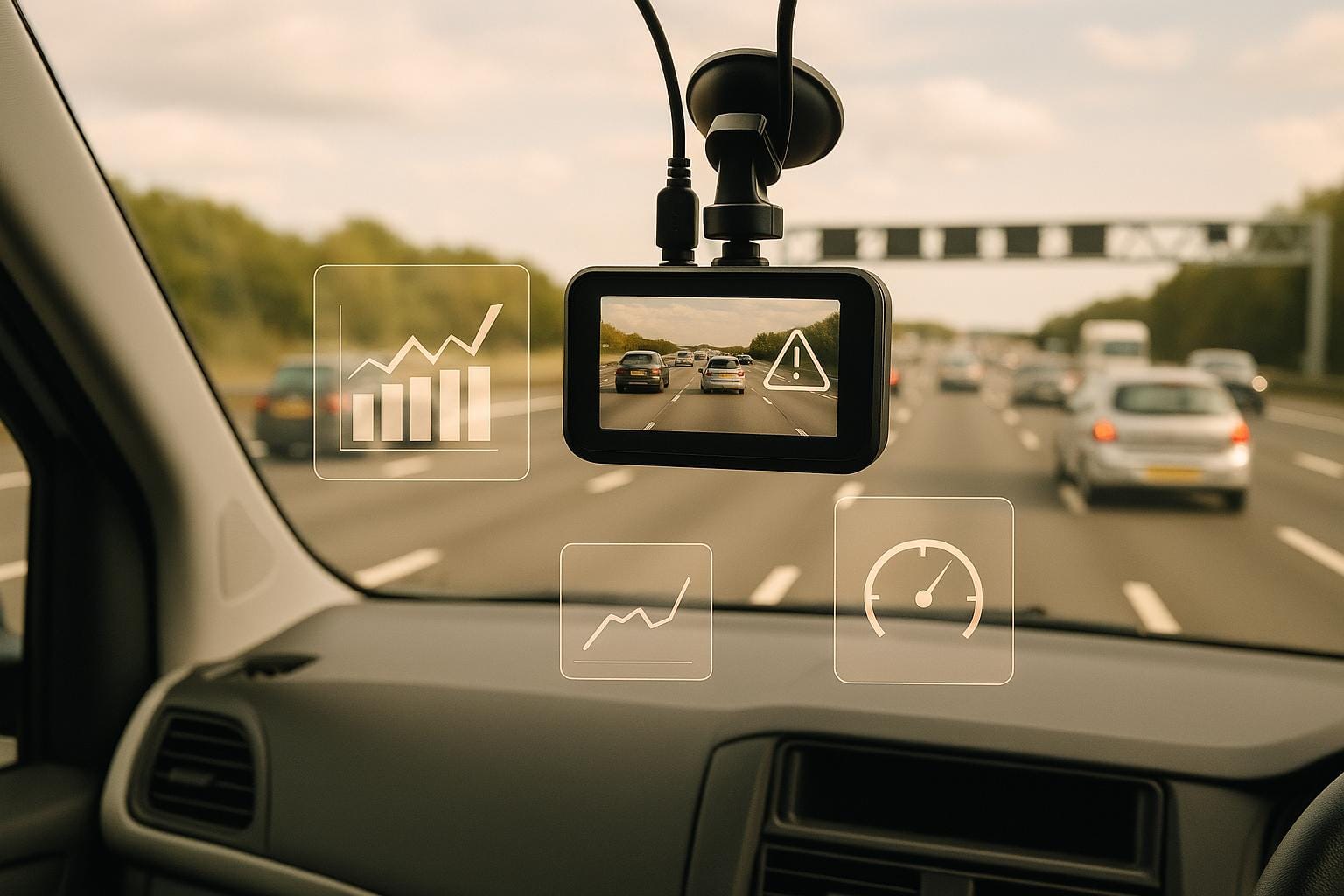
AI-powered dash cameras have transformed fleet management, moving beyond simple recording to real-time analysis. These systems identify risky driving behaviours, send instant alerts, and provide actionable insights to improve safety, cut costs, and support compliance with UK regulations. Key benefits include:
- 24% reduction in fuel costs and 19% lower accident-related expenses.
- Real-time monitoring to address unsafe driving immediately.
- Automated reporting for compliance with UK and EU standards.
- Predictive analytics to prevent incidents before they occur.
- Features like GPS, radar, and multi-sensor fusion for 360° monitoring.
AI dash cameras also simplify management with cloud-based dashboards, driver performance tracking, and automated coaching tools. For UK fleets, this technology is essential to improve safety, reduce costs, and meet regulatory demands. Systems like GRS Fleet Telematics offer affordable solutions starting at £7.99 per vehicle per month, combining advanced features like dual-tracker technology and predictive maintenance for enhanced fleet performance.
GO Focus Plus Explained: How AI Dash Cams Reduce Collisions and Costs

Key AI Features in Dash Camera Analytics
Dash cameras have evolved from simple recording devices into advanced tools that help fleet managers improve safety and efficiency. With AI capabilities at their core, these systems offer smarter data analysis and proactive management options.
Behaviour Analysis and Risk Detection
AI-powered behaviour analysis has taken dash camera technology to a new level. Using computer vision, these systems monitor driver actions in real time, identifying risky behaviours such as mobile phone use, drowsiness, not wearing seatbelts, harsh braking, sudden acceleration, and sharp turns. The ability to react instantly is a game-changer, with some systems delivering alerts to drivers and notifications to fleet managers in under 200 milliseconds.
In 2025, Geotab introduced the GO Focus Plus AI dashcam, which achieved a 95% reduction in risky driving behaviours across UK fleets by combining real-time voice alerts with automated event detection. This immediate feedback acts as an on-the-spot coaching tool, helping drivers adjust unsafe habits as they occur.
Modern systems rely on multi-sensor fusion to boost detection accuracy. By combining data from GPS, IMU (Inertial Measurement Unit), radar, and video analysis, these cameras provide 360° panoramic monitoring. This ensures risky behaviours are identified regardless of lighting conditions or camera angles.
Video and Event Classification with Machine Learning
Machine learning has transformed how fleet managers handle video footage, automating the classification and analysis of events. AI systems can categorise incidents like near-misses, collisions, and unsafe driving patterns, making event review faster and more efficient.
These algorithms, trained on vast driving datasets, are designed to flag only critical incidents, saving fleet managers from sifting through hours of irrelevant footage. This targeted approach ensures that important events get the attention they deserve, without wasting time on false alarms.
Beyond detection, AI systems provide trend reports that highlight patterns in driver behaviour, helping to identify high-risk drivers. This data can guide targeted training programmes aimed at improving safety. Integration with cloud platforms means these systems continually refine their accuracy as they process more data, further reducing false positives while maintaining high detection rates.
Data Privacy in AI Systems
As AI systems become more adept at collecting and analysing data, privacy concerns have taken centre stage. In the UK, where GDPR compliance is a legal requirement, fleet operators must strike a balance between effective monitoring and respecting driver privacy.
AI dash cameras now feature configurable privacy controls to address these concerns. For instance, drivers can often decide when in-cab cameras are active, and some systems automatically stop recording inside the vehicle during breaks or when parked. Data anonymisation is another key feature, ensuring sensitive information remains protected while still providing useful analytics.
UK fleets commonly adopt clear data retention policies, which allow fleet managers to set automatic deletion schedules to comply with data protection regulations. Access to footage and analytics is tightly managed through role-based permissions, with audit trails documenting when and why data is accessed.
Encryption ensures data security throughout its lifecycle, protecting video footage and analytics during transmission and storage. This layered approach safeguards sensitive information at every stage.
Transparency is crucial when implementing these systems. Fleet operators should clearly communicate what data is being collected, how it will be used, and who has access to it. Involving drivers in the rollout process can help build trust and highlight the safety benefits of the technology.
| Privacy Feature | Traditional Systems | AI-Enhanced Systems |
|---|---|---|
| Data Control | Limited options | Configurable recording periods |
| Access Management | Basic passwords | Role-based permissions with audit trails |
| Data Retention | Manual deletion | Automated, policy-driven retention |
| Anonymisation | None | Driver identity protection options |
| Compliance Support | Basic | Designed for GDPR compliance |
Benefits of AI Dash Cameras for Fleet Management
Using AI-powered dash cameras brings clear advantages in safety, compliance, and efficiency for fleets across the UK.
Improving Fleet and Driver Safety
AI dash cameras create a proactive approach to safety, helping to lower accident rates for UK fleets. Work-related road accidents cost UK businesses an estimated £2.7 billion annually in repairs, insurance claims, and downtime. With AI-powered monitoring, risky driving behaviours can be identified and addressed early, reducing these expenses. Continuous hazard detection in real time also helps cut fuel costs and accident-related spending. Real-time alerts and automated coaching tools encourage safer driving habits, while managers can track progress through cloud-based analytics. These safety improvements also support adherence to regulations and enhance overall operations.
Compliance with UK and EU Regulations
AI dash cameras simplify compliance by automating the collection and reporting of safety data to meet UK and EU standards. Automated incident reports and detailed behavioural analytics make it easier to track driver performance, document accidents, and manage risks, reducing the administrative workload for fleet managers and minimising legal exposure. Features like high-definition video recording, dual-facing cameras, and secure cloud storage ensure evidence remains intact and tamper-proof. Automated alerts and event tagging allow for quick retrieval of footage for insurance claims or legal issues, while comprehensive reports can be generated with minimal manual effort.
Improving Operational Efficiency
AI analytics enhance operational efficiency by improving route planning through the analysis of traffic patterns and driver behaviour, which helps cut downtime and fuel usage. Shifting from reactive to proactive, data-driven fleet management has led to notable operational gains. Automated analytics save time, optimise resources, and reduce costs. Metrics such as driver behaviour scores, incident rates, route efficiency, fuel consumption, and vehicle downtime are tracked and displayed in real-time dashboards and reports. This constant monitoring enables managers to identify trends, address inefficiencies, and implement targeted solutions, leading to cost savings, better scheduling, and consistent service quality. Additionally, AI dash cameras contribute to eco-friendly initiatives by promoting fuel-efficient driving and supporting the transition to low-emission fleets in alignment with the European Green Deal.
| Operational Impact | Traditional Management | AI Dash Camera Systems |
|---|---|---|
| Fuel Cost Reduction | Manual monitoring | 24% average reduction |
| Accident-Related Expenses | Reactive response | 19% average decrease |
| Compliance Reporting | Manual documentation | Automated, real-time |
| Driver Behaviour Monitoring | Periodic reviews | Continuous, instant feedback |
| Route Optimisation | Basic planning | AI-driven traffic analysis |
These benefits illustrate how AI-enhanced monitoring reshapes fleet operations by enabling real-time decision-making. Next, we’ll explore how real-time dashboards and automated reports further empower UK fleet managers.
Data Visualisation and Reporting
AI-powered dash camera systems transform video and telematics data into practical insights. By combining video footage, GPS data, accelerometer readings, and vehicle diagnostics, these systems provide dashboards designed for quick and informed decision-making.
Real-Time Dashboards and Reports
AI dash cams enable live monitoring, giving fleet managers instant access to operations. Many leading platforms feature cloud-based dashboards, allowing managers to view live video feeds and receive immediate notifications for events like harsh braking or distracted driving.
Real-time reporting means issues can be addressed immediately. For example, if a driver engages in risky behaviour, the system sends instant alerts, enabling on-the-spot coaching instead of delayed feedback. This proactive approach is effective - research shows that 70% of operators use AI dash cam systems alongside coaching programmes to promote safer driving habits. Additionally, real-time dashboards provide live updates on fleet status, driver performance, and incident alerts. These systems automatically analyse 100% of driving time, classifying events to significantly reduce the need for manual video reviews.
This constant stream of data seamlessly transitions into detailed performance metrics tailored to UK fleet operations.
Common Reporting Metrics for UK Fleets
UK fleet operators rely on specific reporting metrics that align with local regulations and operational priorities. One key tool is driver scorecards, which assess individual drivers based on safety and compliance factors like speeding, harsh acceleration, mobile phone use, and adherence to rest breaks.
Heatmaps are another valuable feature, visually highlighting high-risk areas or accident-prone locations. These insights help fleet managers adjust routes to avoid dangerous sections of the road network. Such reports also simplify compliance with regulatory standards, including tachograph rules and working time directives. Automated systems monitor rest break violations, excessive driving hours, and other breaches, making it easier to demonstrate compliance during audits and avoid fines.
Some advanced systems go a step further by using machine learning to reward positive driving habits while identifying risks. This balanced approach encourages safety improvements without relying solely on penalties.
Comparison of Reporting Features
Different reporting methods cater to various operational needs, and understanding their strengths can help managers select the right tools for their fleets.
| Feature | Real-Time Analysis | Post-Event Analysis | Automated Review | Manual Review |
|---|---|---|---|---|
| Speed of Insight | Immediate alerts and intervention | Delayed (hours or days) | Seconds to minutes processing | Hours to days |
| Intervention Capability | Proactive coaching and alerts | Reactive response after incidents | Automated coaching triggers | Requires human review |
| Accuracy Level | High AI-driven consistency | Depends on reviewer expertise | Consistent, scalable results | Variable, subject to human bias |
| Resource Requirements | Low automated processing | Higher manual review needs | Minimal ongoing input | Significant time investment |
| Primary Use Case | Preventing incidents, compliance | Investigating incidents, insurance claims | Ongoing safety improvement | Detailed incident investigations |
Real-time analysis is ideal for preventing accidents and ensuring compliance, while post-event analysis is better suited for identifying long-term risks and improving driver behaviour. For instance, real-time alerts can warn a driver about harsh braking, potentially preventing a collision. On the other hand, post-event analysis might uncover patterns of risky behaviour, allowing managers to implement targeted training.
Automated reporting systems process large volumes of video and telematics data quickly, delivering consistent and objective results. Some advanced platforms have been shown to reduce risky driving by up to 95% by issuing real-time voice alerts. While manual reviews are thorough and valuable for in-depth investigations, they require significant time and resources, making them less practical for routine monitoring.
Together, these tools create a comprehensive reporting framework. By integrating real-time analytics with driver behaviour monitoring, fleet managers gain a unified view of operations. GRS Fleet Telematics enhances this ecosystem with advanced van tracking solutions and dual-tracker technology, offering monitoring services starting at just £7.99 per month - all while meeting the high security standards demanded by UK businesses.
Future Trends in AI Dash Camera Technology
AI dash cameras are shaping the future of fleet management by offering predictive insights, seamless integration, and advanced driver assistance. These advancements are particularly crucial for UK fleets navigating strict regulations and operational hurdles.
Advances in Predictive Analytics
Predictive analytics is revolutionising AI dash camera capabilities, shifting fleet management from reacting to incidents to preventing them. By analysing vast amounts of dash cam footage and telematics data, modern AI systems can pinpoint patterns linked to risky behaviours like harsh braking, speeding, or distracted driving.
This technology enables fleets to anticipate potential issues, allowing for timely coaching or route changes. For UK fleets, the benefits are clear: improved safety records, reduced costs, and better regulatory compliance. These systems continuously monitor driver behaviour and vehicle performance, creating risk profiles to signal when intervention is necessary.
Sensor fusion technology has taken this a step further, combining data from GPS, IMU, and radar to deliver precise vehicle tracking and 360° monitoring. Some systems can issue alerts in less than 200 milliseconds, ensuring immediate action in critical moments.
Complementing these predictive capabilities, advancements in telematics are enhancing connectivity and operational efficiency.
Integration with New Telematics Technologies
Emerging telematics technologies, powered by 5G and WiFi6, are enabling ultra-fast data transfers, making real-time analytics and live streaming a reality. This leap in connectivity supports instant analysis of incidents, which was previously hindered by slower networks.
Modern systems now integrate video, GPS, accelerometers, and vehicle diagnostics into a unified data stream. This holistic approach improves both safety and efficiency for UK fleets. For instance, 78% of European fleet managers already use real-time insights from AI dash cameras to optimise operations.
The rise of cloud-based platforms has further empowered fleet managers by providing remote access to critical data. This facilitates quick decision-making and streamlined management.
Predictive maintenance, now a standard feature, allows fleets to identify potential vehicle issues before they lead to breakdowns, saving time and money. This is especially beneficial for UK fleets operating under tight schedules and regulatory demands. WiFi6 connectivity has also proven essential, enabling efficient uploads of large video files and analytics data when vehicles return to depots, ensuring operations remain uninterrupted.
Augmented Reality and Driver Assistance
Building on predictive analytics and telematics, augmented reality (AR) is now offering in-cab driver support by overlaying critical information directly onto the driver’s view. Paired with AI dash cameras, AR provides real-time assistance by showing navigation prompts, hazard warnings, and speed limits exactly when they’re needed.
This technology enhances safety by delivering information at the right moment, helping drivers make better decisions. For example, AR overlays can highlight hazards detected by AI, such as pedestrians in blind spots or fast-approaching vehicles. This integration is already reducing accidents and ensuring compliance with UK road safety standards.
Advanced driver assistance systems (ADAS) are also becoming standard, offering features like real-time alerts, navigation overlays, and fatigue detection. These systems can identify risky behaviours, such as mobile phone use or signs of driver fatigue, and send immediate alerts to both drivers and managers.
Future AR developments aim to predict hazards even earlier, identifying potential collisions several seconds before they occur. This capability could be a game-changer for fleets operating in busy urban areas or under challenging weather conditions.
As AI, IoT, and electric vehicle technologies continue to evolve, intelligent video telematics is driving the digital transformation of UK and European fleets. With these advancements, fleet operators can look forward to even more advanced safety features and operational insights, redefining how commercial vehicles are managed.
Using GRS Fleet Telematics for AI Dash Camera Solutions

GRS Fleet Telematics takes fleet management to the next level by combining advanced van tracking with AI-powered dash camera analytics. This system is designed to help UK fleet operators tackle vehicle security and operational challenges head-on. By integrating real-time analytics and predictive features, it ensures a seamless approach to monitoring and improving fleet performance.
The standout feature here is the dual-tracker technology. This setup includes a hardwired primary tracker, backed up by a concealed Bluetooth tracker. Even if the main device is tampered with, the backup ensures uninterrupted monitoring. This dual-layer protection contributes to an impressive 91% recovery rate for stolen vehicles, far exceeding industry norms.
AI video analytics further boost security by analysing driver behaviour and detecting incidents in real time. The system flags risky actions like speeding, mobile phone use, harsh braking, and signs of driver fatigue. Alerts are sent instantly to both drivers and fleet managers. High-definition, dual-facing cameras paired with machine learning algorithms not only capture incidents but also help prevent them by identifying potential safety issues.
Driver coaching is another key feature. The system provides instant feedback and detailed reports, helping to foster a culture of safety while reducing the need for manual incident reviews. All video and analytics data are stored in the cloud, ensuring easy access for compliance purposes. Automated logging of driver hours and vehicle locations also helps meet UK and EU regulations.
Benefits for UK Fleet Operators
GRS Fleet Telematics offers an affordable entry point, with solutions starting at just £7.99 per vehicle per month. This makes cutting-edge AI analytics accessible to fleets of all sizes. The financial benefits go beyond affordability; proactive risk management addresses the staggering £2.7 billion annual cost of work-related accidents to UK businesses.
Beyond safety improvements, fleet operators have reported significant operational gains. Advanced management tools can cut fuel costs by up to 24% and reduce accident-related expenses by 19%. The system’s video analytics also provide solid evidence for insurance claims, which could lead to lower premiums - a welcome relief for any business.
Real-time dashboards and automated reporting simplify fleet oversight. They offer actionable insights into driver behaviour, vehicle usage, and overall operational efficiency, helping managers make informed decisions quickly.
Tailored Solutions for Fleet Needs
GRS Fleet Telematics understands that no two fleets are the same. That’s why it offers three hardware configurations to cater to different needs:
- Essential (£35): Provides real-time tracking.
- Enhanced (£79): Adds a secondary Bluetooth backup for extra security.
- Ultimate (£99): Includes immobilisation features for maximum protection.
The AI analytics features are just as flexible. Businesses can choose the level of monitoring that fits their needs, whether that’s basic safety and theft prevention or a more comprehensive package including driver performance analysis, route optimisation, and predictive maintenance.
The system also supports a gradual rollout, allowing fleet managers to start with core tracking features and expand to advanced AI analytics over time. With thorough training, ongoing support, and regular updates, operators can fully leverage the system while staying compliant with regulations. These tailored solutions not only integrate advanced AI features but also deliver the operational improvements discussed throughout this article.
Conclusion
The evolution of AI in dash camera analytics is transforming modern fleet management, delivering impressive results. With AI-driven systems, fleet operations now move beyond basic recording to real-time monitoring. This shift has led to measurable benefits, including a 24% reduction in fuel costs, 19% fewer accident-related expenses, and the ability to detect risky driving behaviours in just 0.1 seconds - cutting unsafe driving incidents by up to 95%.
For UK fleet operators, the regulatory advantages are equally striking. AI dash cameras automatically handle digital record-keeping to meet UK and EU transport authority requirements. This simplifies compliance with hours of service regulations and incident documentation, easing administrative workloads while ensuring fleets are audit-ready.
Adoption of this technology is growing rapidly. Across Europe, 78% of fleet managers now use real-time GPS tracking and analytics, and nearly half of UK fleet managers plan to implement AI systems by 2030. This isn't just about following technology trends - it's about staying competitive in a demanding market.
AI dash cameras integrate seamlessly with sensor data, offering complete fleet oversight. By combining GPS, radar, and inertial navigation, these systems provide comprehensive monitoring. For example, GRS Fleet Telematics offers dual-tracker technology with AI dash cameras for as little as £7.99 per month, enabling 360° monitoring and achieving an impressive 91% vehicle recovery rate.
Looking ahead, the rise of predictive analytics and IoT integration will make AI dash cameras even more critical. With tighter regulations and growing environmental responsibilities, these advancements ensure fleets remain safe, efficient, and compliant in an evolving industry.
AI dash cameras are no longer optional - they're a necessity for fleets aiming to stay ahead in today’s competitive landscape.
FAQs
How can AI-powered dash cameras help fleet operators save on fuel and reduce accident costs?
AI-powered dash cameras are transforming fleet management by helping operators save money and improve efficiency. These cameras analyse driver behaviour and fuel consumption, pinpointing habits like harsh braking or excessive idling that waste fuel. With this data, operators can implement changes to drive smarter and cut down on unnecessary fuel costs.
But it’s not just about saving on fuel. These systems also make roads safer by keeping an eye on risky driving behaviours and promoting adherence to safety protocols. The result? Fewer accidents, lower repair bills, and reduced insurance claims. Over time, these benefits add up, offering fleet operators a noticeable reduction in operational expenses.
How does the use of AI in dash cameras ensure data privacy and compliance with GDPR in the UK?
AI-powered dash cameras in the UK are built with data privacy and GDPR compliance at the forefront. These systems are designed to handle and store data securely, with robust access controls in place to prevent unauthorised use or breaches.
To meet GDPR requirements, many of these cameras include features like data anonymisation, which ensures that personal details remain unidentifiable. They also offer customisable privacy settings, giving businesses the flexibility to decide what information is recorded and shared. Furthermore, companies using these tools are advised to carry out regular audits to ensure their data management practices adhere to UK regulations.
How do predictive analytics and telematics improve AI dash cameras for fleet management?
The combination of predictive analytics and telematics has taken AI-powered dash cameras to a whole new level, turning them into essential tools for fleet management. Predictive analytics works by examining both real-time and historical data to flag potential risks, like unsafe driving practices or upcoming vehicle maintenance needs, before they turn into expensive problems.
Telematics adds another layer of precision by offering detailed tracking and insights into vehicle performance, driver behaviour, and location. Together, these technologies empower fleet managers to enhance safety, streamline routes, cut operational costs, and stay compliant with industry regulations.